

MoneyBlock (Legacy version)
-No Dual Auth
-More Reliable (if there are issues with the regular login, check the Legacy version.)
Bryan is worried! Why?
Bryan is Excited! Why?
War is over???

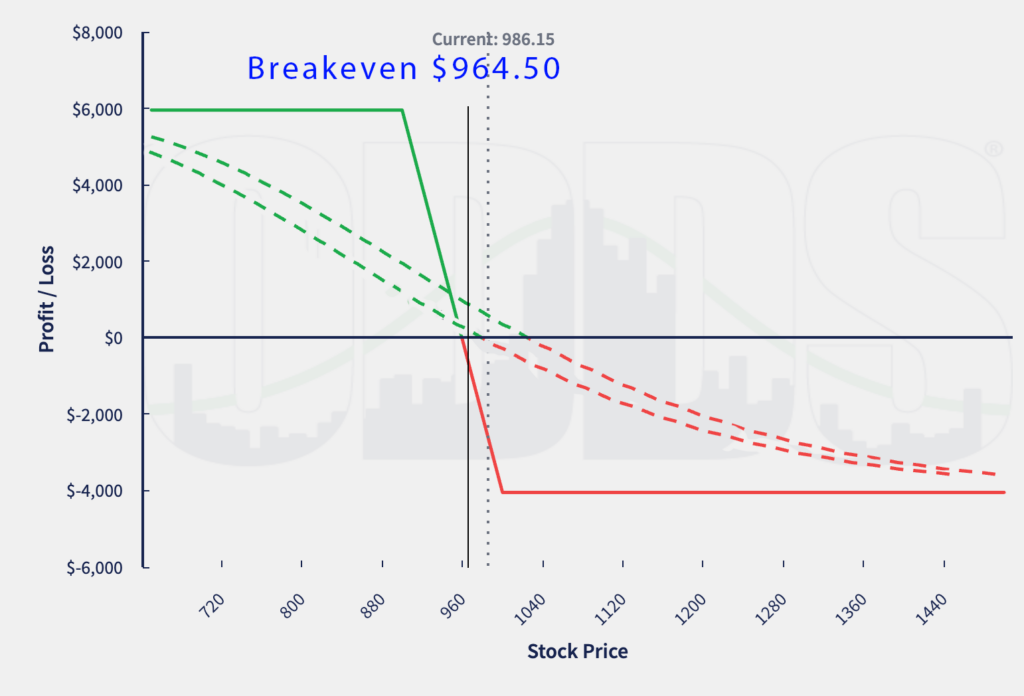
You may have noticed a MU Bear Put trade in your account this last Friday.
Does this mean we are now Bearish on MU???
This is a short-term trade. It expires on this Thursday the 18th.
Why did we enter this trade?
*Weekend effect.
*Protect against event risk


The U.S. stock market has surged to new highs, but Jim Rogers isn’t celebrating.
The legendary investor and co-founder of the Quantum Fund says the strength investors are seeing across global markets may actually be a warning sign ” not a reason to relax.
“The U.S. market has never had such a long upward period without a problem¦ Nearly every stock market in the world is doing well ” that has rarely happened in my lifetime,” Rogers said in a recent interview (1) with tastylive. “But when it has happened, it has been a time to be worried and to get out.”
Then came the blunt warning.
“So, everything’s okay now,” he said. “But if you ask me, the end will probably come soon.”
Rogers’ concern comes as U.S. stocks have continued climbing under President Donald Trump’s second term, with investors cheering corporate profits, enthusiasm around artificial intelligence and hopes that Washington’s pro-growth agenda will keep the rally alive.
That optimism, Rogers suggested, is exactly what makes him uneasy.
“Now Washington will say, ‘Don’t worry, it’s going to last forever,'” Rogers told Glenn Diesen in another interview. “I worry when Washington says something like that.”
Trump has often pointed to the stock market’s strength under his leadership. In a post on Truth Social earlier this year, he predicted, “100,000 on the DOW by the end of my Term.” With his term set to end in January 2029, that would imply a roughly 100% climb in the Dow in less than three years.
Part of his concern comes down to debt.
“The U.S. is the largest debtor nation in the history of the world, and yet it’s higher and higher every day, every hour,” he said.
According to Treasury Department data, the U.S. national debt now stands at $38.97 trillion ” and climbing.
For Rogers, that mounting debt could spell trouble ahead.
“Historically, when somebody gets gigantic amounts of debt, eventually it causes problems,” Rogers remarked. “I don’t know when eventually is, but I hope I’m getting prepared.”
He also revealed that he’s sitting on a large pile of cash ” specifically in U.S. dollars.
That might sound contradictory given his concerns about U.S. debt. But Rogers says his dollar position is based less on faith in America’s balance sheet and more on how investors tend to behave when markets panic.
“I own a lot of U.S. dollars,” Rogers noted in the Diesen interview. “I own them because people will look for a safe haven. Many people in the world think that the U.S. dollar is a safe haven ” it’s not, but people think it is.”
In other words, Rogers believes that if turmoil hits, investors around the world could still rush into the dollar ” pushing it higher, at least temporarily.
“If I’m right, at some point, as the crisis comes, the U.S. dollar will go up a lot,” he said. “I hope I will be smart enough to sell it.”
That’s a very different message from simply sitting on cash forever. Rogers is treating the dollar as a potential crisis trade, not a permanent shelter.
What is Stan Druckenmiller saying now?
Stanley Druckenmiller’s core thesis is to bet on the structural strength of the U.S. economy and the artificial intelligence (AI) boom, while hedging for potential inflationary pressures. He emphasizes investing in long-term economic trends rather than obsessing over being a contrarian, stating that “consensus is right 80% of the time”.
Druckenmiller’s overarching macro-outlook and strategy covers several key areas:
1. Artificial Intelligence and Tech
- Bullish on AI: He believes we are still in the early stages of the AI growth story and continues to be confident in its long-term potential.
- Pragmatic on Valuations: While he notes that tech equities and the AI boom can appear “disturbingly heated,” he views AI as a technological revolution that will ultimately boost productivity and free up labor.
- Job Market: He pushes back against the narrative that AI will lead to immediate mass unemployment, pointing to historical precedents”such as in radiology and nursing ”where technology initially seemed threatening but ultimately allowed workers to focus on higher-level tasks.
2. The U.S. Economy & Investment Strategy
- “Bet on America”: Druckenmiller remains highly optimistic about the underlying strength of the U.S. economy, citing ongoing fiscal stimulus and potential interest rate cuts.
- Non-Traditional Hedging: Known for concentrating his capital in his highest-conviction bets, he recently highlighted the need to look outside of highly crowded, massive mega-cap stocks. For instance, he found hidden value in healthcare and global payment plays, positioning around dislocations where perception is catching up with fundamentals.
- Energy and Commodities: He has also heavily allocated resources to energy stocks, driven by the structural supply constraints in traditional fossil fuels and the failure of renewables to scale quickly enough to meet global demand.
3. Market Psychology & Trading Philosophy
- Contrarianism Overrated: Druckenmiller has expressed that fighting the consensus for the sake of being contrarian is a flawed strategy. He does not mind entering a “crowded trade” if the overall trend is favorable and the thesis is solid.
- Discipline over Timing: He advises other money managers to focus on making concentrated bets on high-conviction ideas, maximize winning positions, and “get over” market drawdowns quickly to move on to the next opportunity.
https://www.briefing.com/the-big-picture
A rate hike in our midst
Briefing.com Summary:
*Inflation remains elevated, with CPI and PPI accelerating further above the Fed’s 2% target.
*Rising Treasury yields have effectively tightened financial conditions, reducing pressure for immediate Fed action.
*Markets expect the Fed to stay on hold, as inflation fears ease and bond markets have done the tightening.
The past week produced the Consumer Price Index for May and the Producer Price Index for May. Both reports made it clear that inflation remains a problem. The Consumer Price Index was up 4.2% year-over-year versus 3.8% in April. The Producer Price Index was up 6.5% year-over-year versus 5.7% in April.
There was much ado about the fact the core readings for these reports, which exclude food and energy, were tamer, suggesting there hasn’t been as much pass-through to core inflation from rising energy costs as had been feared. Core CPI was up 2.9% year-over-year versus 2.8% in April, and core PPI was up 4.9% year-over-year, unchanged from April.
The inflation rates continue to linger uncomfortably above the 2.0% level the Federal Reserve has identified as its target inflation rate, albeit for PCE inflation, yet these reports are swimming in the same pool of public perception.
For all intents and purposes, the market swam a few victory laps after these reports, aided by the hope that oil and gasoline prices are poised to disinflate with news of a peace deal between the U.S. and Iran.
They also benefited from a belief that the Fed may not have to raise rates for some time. Stop and think about that for a moment.
A year that started with an expectation that the Fed would cut rates two or three times before the end of the year is bubbling with excitement that the Fed may not have to raise rates before the end of the year.
Hold Your Fire
Several Fed officials are not happy with the state of inflation and have averred that it may be necessary to raise interest rates to get inflation under control. That will be a thoughtful point of debate at the coming FOMC meeting, the first to be managed by new Fed Chair Kevin Warsh, but it may just be a moot point considering the Treasury market has already done its own tightening work.
When the year started, the 2-yr note yield stood at 3.48%, and the 10-yr note yield rested at 4.17%. By the time the war with Iran started in late February, the 2-yr note yield was at 3.40%, and the 10-yr note yield was just under 4.00%. Today, their yields sit at 4.08% and 4.48%, respectively, but they had gotten as high as 4.16% and 4.66%.
Those higher yields hold some added appeal for fixed-income investors, but they also make it more expensive to finance a new home or to refinance debt issued at lower rates. That is, they can be demand killers and/or repayment burdens that slow growth.
In turn, higher rates weigh on equity multiples and can drive down stock prices, which curb the wealth effect and, tangentially, consumer spending.
When the Fed raises the target range for the fed funds rate, its aim is to slow growth to keep inflation in check. It hasn’t been quick to raise rates in the face of rising energy prices, though, because the Fed realizes it can’t control energy costs, which are volatile. Moreover, it is cognizant that price spikes associated with geopolitical events are often temporary.
That is why a move in WTI crude futures from $65.00/bbl at the start of the war to $112.00/bbl when the tenuous ceasefire was announced in early April didn’t prompt a hasty rate-hike decision. Instead, it drove a prevailing wait-and-see mindset that persists today. That disposition is nearly certain to remain in place following the June 17 FOMC meeting, especially since oil prices have backed down to $85.00/bbl, and there is talk that a memorandum of understanding for peace between the U.S. and Iran could be imminent.
Briefing.com Analyst Insight
Interestingly, the yield on the 10-yr note is about 20 basis points higher today than it was when oil prices peaked in early April. The market, therefore, hasn’t been wholly dismissive of the potential pass-through effects of higher energy prices, partly because it is also aware that AI buildout efforts are creating pricing bottlenecks elsewhere. And it’s not as if there isn’t inflation beyond food and energy prices. There is, and it hurts many consumers to the core.
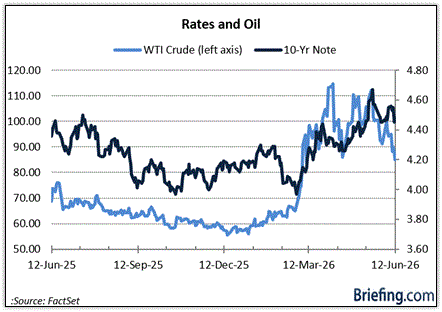
That point notwithstanding, the market is less fearful that the current inflation is going to turn into runaway inflation. That is evident in the 5-year breakeven inflation rate, which, at 2.40% today, is exactly where it was the day the war with Iran started.

That is notable, but so, too, is the recognition that this measure of what market participants expect inflation to be in the next five years, on average, is still above the 2.0% target rate.
The Fed isn’t going to be cutting rates soon, and it also has some cover, with oil prices and breakeven rates coming down, not to raise rates soon either. The Fed doesn’t need to, not when the market has done its bidding for it.
This leaves Fed Chair Warsh in a good spot entering his first meeting as Fed chair. He won’t have to sell a hard case for cutting rates now, and he won’t have to spoil his debut with a rate hike. The market has taken care of all this for him, exercising its own rate hike in our midst.
Where will our markets end this week?
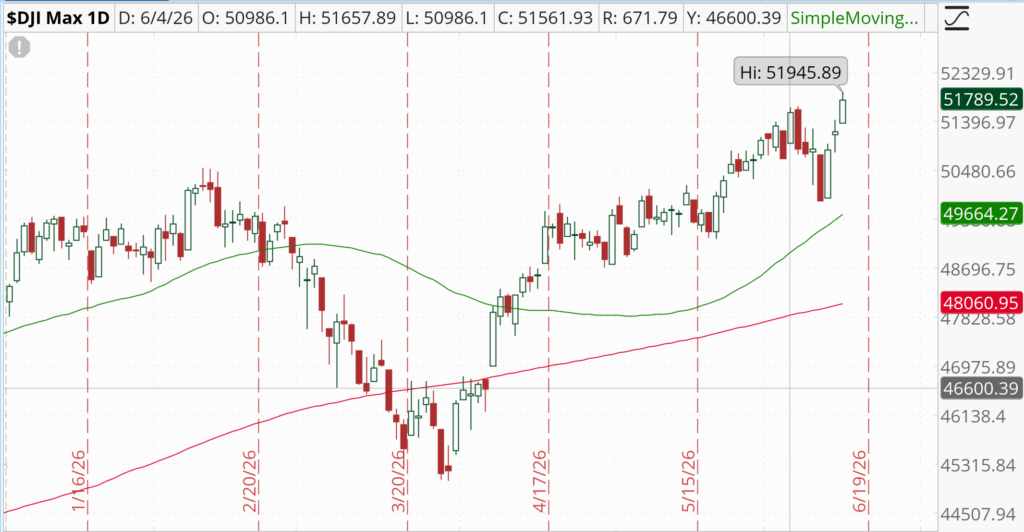
DJIA – Bullish
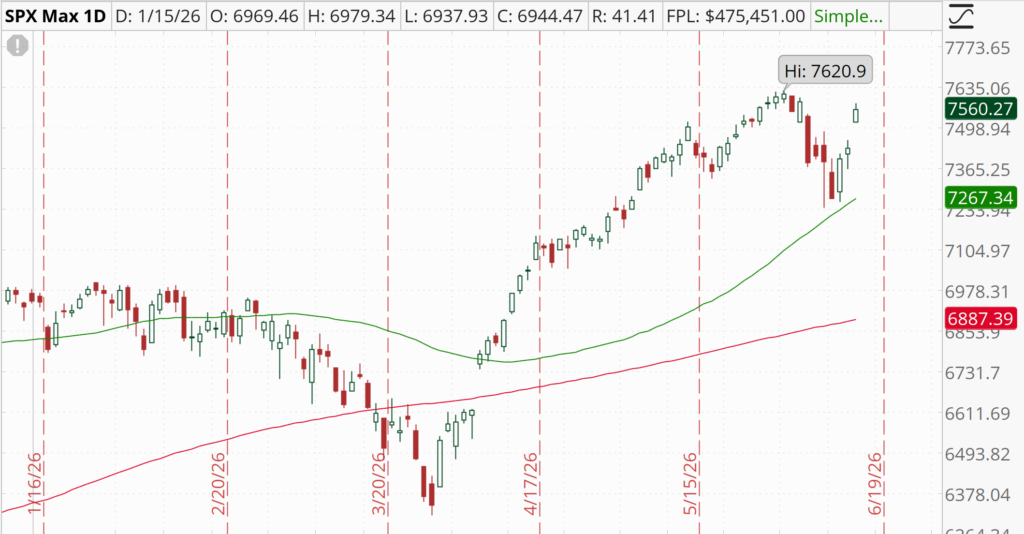
SPX – Bullish
COMP – Bullish
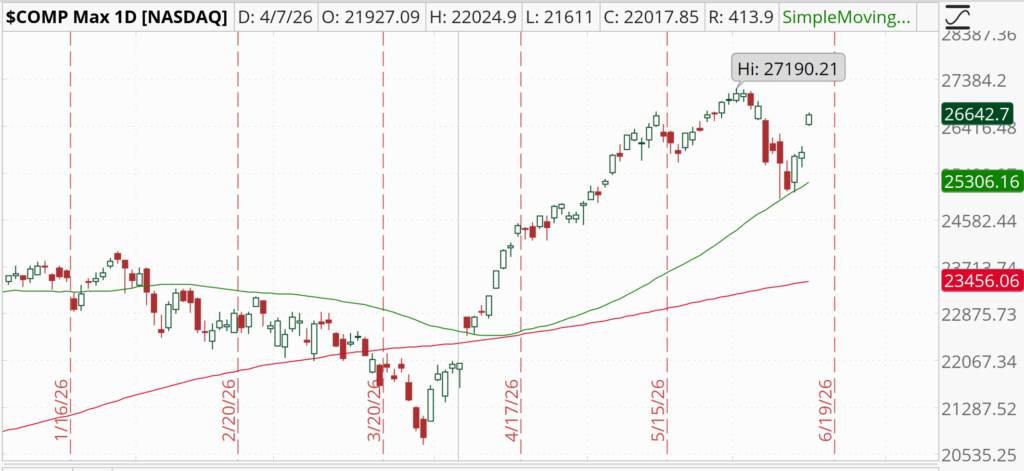
Where Will the SPX end June 2026?
Lower
06-12-26: +0.6%
06-05-26: -2.6%
Earnings:
Mon: CGC, PLAY, DOMO
Tues: LZB, WDH
Wed: JBL, KMX, SB, SWBI
Thur:ACN, KR, RR
Fri: CURR, BTM
Econ Reports:
Mon: Empire State Manufacturing, Industrial Production, Housing Market Index
Tue: Housing Starts & Permits, Import & Export Prices
Wed: MBA, EIA Petroleum Status, Atlanta Fed Business Inflation Expectations, Business Inventories, Retail Sales, FOMC ANNOUNCEMENT, FOMC CHAIR PRESS CONFERENCE
Thur: Jobless Claims, Philadelphia Fed Manufacturing Index, EIA Natural Gas Report
Fri:
How am I looking to trade?
www.myhurleyinvestment.com = Blogsite
info@hurleyinvestments.com = Email
Questions???
