

Let’s go over a quick trade we just finished and will look to re-enter after their earnings

Entered 110/150 Bull call and 26.02 – 12.82 = $13.20
Our target exit was 20% or out before the earnings in Sept
We were OK with a 15% target ROI
Set a $15 exit limit order

Closed 27.95-12.90 = $15.05 – 13.20 = $ 1.85 /13.20 = 14% ROI = $185 per contract
After this earning, IF we get positive news we are looking for another Bull call to enter with a 25% ROI exit
ONE MORE TIME = Trading is a process so don’t FORGET sum of the parts of the process
And let’s look at PLTR Now with the big move up

BUT DON’T FORGET

Earnings –
COST 9/24 AMC
LULU 9/03 AMC
MU 9/23 est
NKE 9/29 est
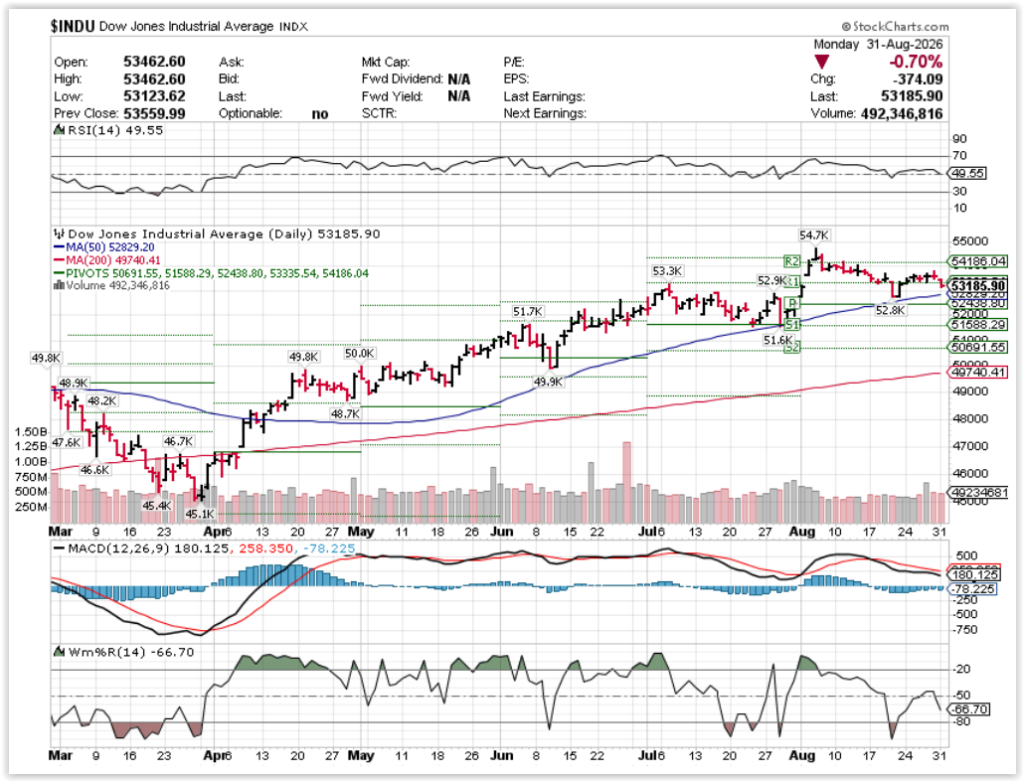
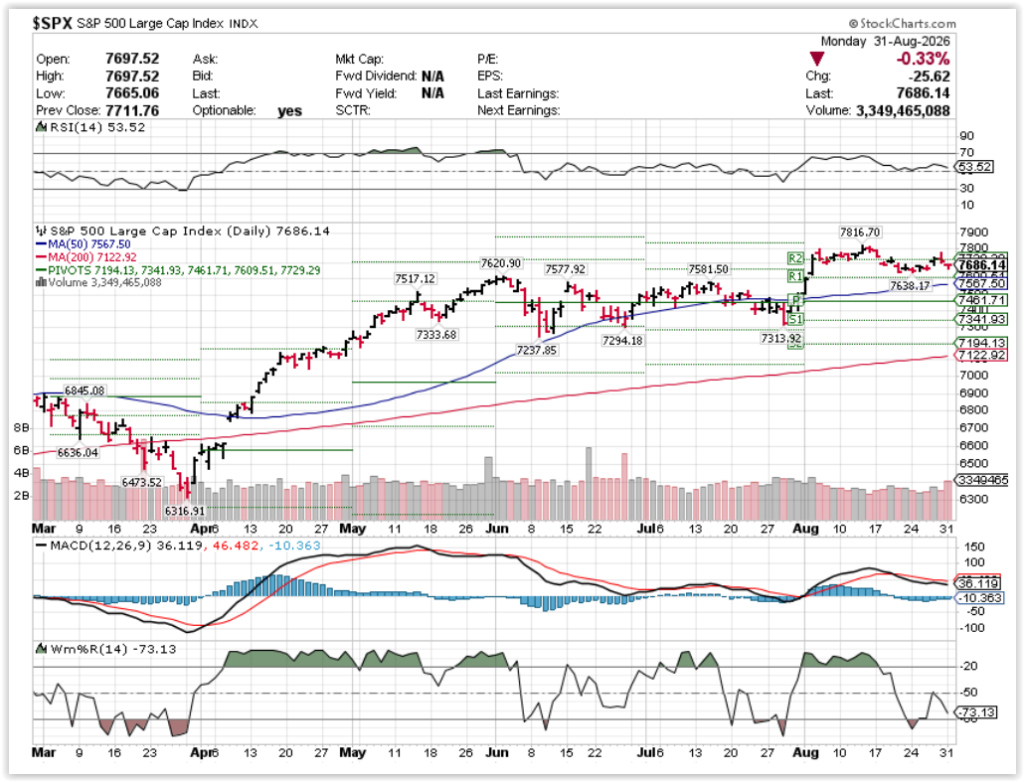
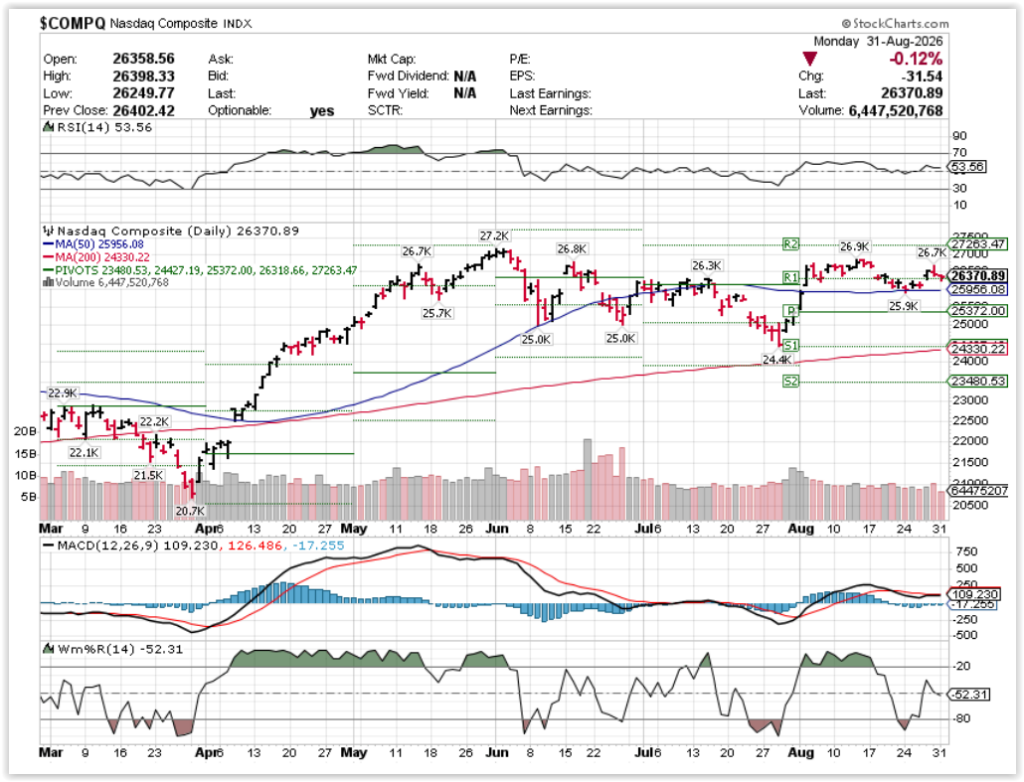
Where will our markets end this week?
Higher
DJIA – Bullish
SPX – Bullish
COMP – Bullish
Where Will the SPX end September 2026?
08-31-2026 -1.50%
Earnings:
Mon:
Tues: DELL, PANW,
Wed: HPE, NTAP, SNOW, AVGO
Thur: CPB, DOCU, SWBI, LULU,
Fri:
Econ Reports:
Mon:
Tue: Construction Spending, ISM Manufacturing
Wed: MBA, ADP, Business Inventories, Factory Orders,
Thur: Initial Claims, Continuing Claims, ISM Services, Trade Balance, Productivity, Unit Lober Costs,
Fri: Average Workweek, Non-Farm Payroll, Private Payroll, Unemployment Rate, Hourly Earnings,
How am I looking to trade?
Placing ATM puts or slightly OTM for September Effect
Adding Covered Calls to positions for the summer doldrums
www.myhurleyinvestment.com = Blogsite
info@hurleyinvestments.com = Email
Questions???
Trump announces deal with Venezuela to secure more than 65 billion barrels of oil reserves
Published Fri, Aug 28 20267:02 PM EDT
Updated Fri, Aug 28 20267:42 PM EDT
Key Points
- The U.S. struck a deal with Venezuela to get majority control of more than 65 billion barrels of oil reserves, according to President Donald Trump.
- Trump said the deal comes “at no cost to” U.S. taxpayers.
The U.S. struck a deal with Venezuela to get majority control of more than 65 billion barrels of oil reserves as the war with Iran roils the global crude trade, President Donald Trump announced Friday.
Trump said in an evening social media post that the agreement — which he touted as “THE BIGGEST OIL DEAL IN WORLD HISTORY” — comes “at no cost to” U.S. taxpayers.
The agreement more than doubles the U.S. oil reserve, according to Trump. Department of Energy data released earlier this month showed oil volumes in the Strategic Petroleum Reserve hit lows not seen since the 1980s.
Trump’s deal with Venezuela follows the U.S.′ January attack on the South American country. Nicolás Maduro, Venezuela’s then-president, and his wife, Cilia Flores, were captured during the strike.
In his social media post, Trump said U.S. officials coordinated with government leaders in Venezuela. They also utilized a “partnership” with unnamed private businesses to secure the deal, he said.
“This Transaction will greatly strengthen the already growing relationship between Venezuela and the United States,” Trump wrote in the post.
Trump’s announcement comes as consumers grapple with spiking energy prices heading into the midterm elections, which will determine if his Republican party retains full control in Washington.
Trump said the Venezuela deal should bring down prices at the pump. The average price of a gallon of gas in the U.S. reached around $4.09 on Friday, a 27% increase year over year, according to AAA.
West Texas Intermediate crude prices fell 4% this week, marking the first losing week of the last three. Still, prices have jumped more than 24% since the U.S. war with Iran began.
Trump’s war with Iran has hampered transit in the Strait of Hormuz, a globally important passageway for crude. Only a handful of ships have recently crossed through Hormuz each day, down from levels of around 100 seen a year ago, according to the International Monetary Fund’s PortWatch tracker.
Trump announced a massive oil deal with Venezuela. Why it won’t lower gas prices anytime soon
Published Mon, Aug 31 20262:54 PM EDT
Key Points
- President Donald Trump promised that his massive oil deal with Venezuela would “substantially lower gas prices for all Americans, long into the future.”
- But Venezuela’s oil infrastructure is in a state of disrepair after years of mismanagement by its socialist government.
- It will take years and huge investments to boost the South American nation’s oil output, experts say. The long-term viability of the deal is also uncertain, they say.
Trump announces deal with Venezuela to secure more than 65 billion barrels of oil reserves
Drivers in the U.S. won’t see lower gas prices from President Donald Trump’s massive oil deal with Venezuela because it will take years to significantly boost the country’s production, experts say.
Trump announced Friday that the U.S. secured majority control over 65 billion barrels of Venezuela’s proven oil reserves, around 20% of the 303 billion barrels that the South American nation is thought to possess.
But huge investments are needed to extract those reserves. The legality and long-term viability of the agreement with Caracas are also uncertain as the terms have not been disclosed by the Trump administration, experts say.
“Nothing has been published, so we’re really still operating on Tweets and rumors,” said David Goldwyn, who served as a State Department special envoy for international energy affairs under President Barack Obama.
Trump promised Friday the deal would “substantially lower gas prices for all Americans, long into the future.” U.S. gas prices were $4.08 per gallon on average nationwide Monday, nearly 30% higher than at this time last year, according to AAA data.
Prices are rising due to Ukraine’s attacks on Russian refineries and the supply disruption in the Middle East triggered by the Iran war. It is basically a foregone conclusion that gas prices will set a new all-time high for Labor Day, said Patrick De Haan, head of petroleum analysis at GasBuddy. The previous Labor Day record was $3.83 per gallon in 2012, De Haan said.
“Unless we get some sort of magical 20 cent drop, which is next to impossible, it’ll be a record setting Labor Day in terms of the national average,” De Haan said. “Gas prices have never been this high this late into the year unfortunately.”
Venezuelan oil exports won’t provide any near-term relief to U.S. drivers. The nation’s oil infrastructure is in a state of disrepair after years of mismanagement by its socialist government. Venezuela is currently producing around 1.2 million barrels a day, down from a peak of 3.5 million bpd in the late 1990s.
Rystad Energy estimated in January that it would require about $180 billion of investment through 2040 to return Venezuela to its peak production. Secretary of State Marco Rubio said Friday that Trump’s deal will bring nearly $100 billion of private-sector investment to the country.
“This will have absolutely no impact on gasoline prices or Venezuelan production for that matter for years to come,” Goldwyn said of the deal.
It is unclear which oil companies will invest in Venezuela to extract its reserves and how those deals will be structured, said Andy Lipow, president of Lipow Oil Associates. Chevron is the only major U.S. oil company currently active in the country, through joint ventures with state-owned PDVSA.
Chevron’s production in Venezuela has increased 15% to 280,000 bpd this year, Chief Financial Officer Eimear Bonner said on the company’s July 31 earnings call. The oil major expects to grow production up to 50% through 2028, Bonner said. This would put Chevron’s Venezuela output at around 400,000 bpd in around two years.
But production growth in Venezuela will be constrained by limits at its export terminals, Lipow said. Tankers are waiting up to 30 days to load crude oil cargoes from Venezuela due to challenges with aging infrastructure and power outages that impacted its ports, the analyst said.
The terminals “would have to be expanded in order to handle more production,” Goldwyn said. “It’s unclear who’s taking on that project,” he said.
Venezuela interim President Delcy Rodriguez said Saturday that the 25-year deal will develop 17 oil fields and initially boost production to 1.5 million bpd. The oil reserves are mostly located in eight blocks in the Orinoco Belt with the rest in the Lake Maracaibo region, according to a list shared with Reuters.
The fields in the Orinoco Belt have little or no access to infrastructure, Goldwyn said. “Those fields will take five to seven years, at best, to deliver increased production for the market,” he said.
And there’s a lot of uncertainty about whether the deal will be viable over the long term. It faces significant political risk in Washington and Caracas, said Bob McNally, president of Rapidan Energy.
A Democratic president in 2029 would likely reconsider or terminate the deal, McNally said. Even if a Republican wins the next presidential election, a future Venezuelan government could tear up the agreement as Caracas has done before, he said.
Venezuelan oil could add large and much needed supplies if all goes well in the coming decades, McNally said. But it is “not a major factor near term in terms of pump prices,” he said.
Bill Ackman buys Netflix again four years after exit, says it has won the streaming wars
Published Thu, Aug 13 202612:09 PM EDT
Updated Thu, Aug 13 20262:04 PM EDT
Bill Ackman is betting on Netflix again, returning to a stock he abruptly exited about four years ago after a sharp decline in the streaming giant’s shares.
Ackman’s Pershing Square Capital Management disclosed a new position in Netflix in its semiannual report, saying the dominant streaming platform has emerged from the industry’s costly battle for subscribers with a leading market position, stronger profit margins and a valuation that has become increasingly attractive after a steep sell-off.
“We acquired a position in Netflix, a business we briefly owned in 2022 and have followed closely ever since,” Pershing Square said in the report.
Netflix shares jumped nearly 4% on Thursday following the disclosure.
The investment marks a notable return for Ackman, who built a large Netflix position in early 2022 only to sell the entire stake about three months later after the company reported its first subscriber decline in more than a decade. Netflix shares plunged on the news, and Ackman said at the time that changes to the company’s business model made it too difficult to predict its future prospects with sufficient certainty.
Pershing now said Netflix has “effectively won the streaming wars,” pointing to its more than 325 million subscribers, nearly twice the combined base of Disney+ and HBO Max. Pershing said that scale allows Netflix to spend heavily on programming while spreading those costs across a much larger audience than its rivals.
Ackman is buying after a much steeper reset in valuation. Netflix shares have fallen roughly 50% from their June 2025 high of $134, cutting the stock’s valuation to about 21 times forward earnings from more than 40 times, Pershing said.
Netflix one year
The bullish thesis is ultimately built around a combination of growth, expanding profit margins and aggressive share repurchases. Pershing expects Netflix revenue to compound at a double-digit rate, while content costs rise more slowly, helping earnings to grow close to 20% annually.
“We believe the company’s current valuation multiple represents a substantial discount for a business with such a strong growth profile and dominant market position,” Pershing said.
Higher-rated corporate debt might not be the best trade. Goldman weighs in on credit quality
Published Fri, Aug 14 202612:00 AM EDT
Justina Lee@in/justina-lee-2742aa59
Investors are reassessing positioning within corporate credit across the quality dimensions by using rating classifications as a proxy, amid higher real rates and an elevated AI-related supply, according to Goldman Sachs.
“The catalyst has been the growing tension between solid fundamentals and challenging supply technicals within certain ‘high quality’ rating cohorts,” Goldman said in a note Thursday.
While the highest rating categories in investment-grade (AA) and high-yield (BB) constitute the highest share of debt issuance historically, their longer duration profiles and thinner spreads also mean that their returns tend to be the most sensitive to higher interest rates, Goldman said.
Goldman noted that lower-rated debt has been outperforming even as investors focus on quality, adding that BBB ratings have fared better than AAs and As on both a total and excess return basis across the U.S. dollar and euro markets. “We have favored BBBs in the USD IG [investment grade] market for a while,” it said.
“We are now adopting a more aggressive stance toward moving down-in-quality within the EUR IG market as well, given our expectation for (higher-rated) AI-related supply to accelerate in the region,” the Wall Street bank said.
Goldman is shifting its rating allocation preference to favor the lower-rated Bs from BBs, citing expectations of an ongoing supply headwind in the BB cohort.
It has, however, shifted its stance on CCCs to underweight from neutral. “While the excess spread premium in this cohort is notable, it is a highly idiosyncratic group and warrants careful credit selection.”
U.S. bond intervention is like ‘paying your mortgage with your credit card,’ JPMorgan’s Sullivan says
Published Thu, Aug 20 202610:48 PM EDT
Lee Ying Shan@in/ying-shan-lee@LeeYingshan
Key Points
- U.S. Treasury buybacks may offer temporary relief but risk merely shifting the debt problem down the road, according to JPMorgan’s James Sullivan.
- Surging government and corporate debt supply, alongside waning foreign demand, could keep upward pressure on yields.
- Higher bond yields are increasingly competing with equities, making investors’ asset-allocation decisions more difficult.
I
The U.S. government’s efforts to manage pressure in the Treasury market may merely shift the problem down the road as a surge in global debt issuance tests investor demand, according to JPMorgan.
The Treasury is effectively buying back longer-duration bonds while issuing shorter-dated bills, a strategy that can provide temporary relief but leaves the underlying debt burden intact, James Sullivan, JPMorgan’s co-head of global fundamental research, told CNBC’s “Squawk Box” on Friday.
The U.S. Treasury Department, led by Secretary Scott Bessent, on Wednesday announced it would at least double the size of its government debt buybacks, starting Sept. 9 and running through Nov. 4.
Sullivan compared the approach to refinancing longer-term obligations with shorter-term borrowing.
“It’s a little bit like paying your mortgage with your credit card. It can work for a while, but eventually the mismatch starts to become more obvious,” he added.
‘Everything has a price’: JPMorgan’s Sullivan on the coming rise in bond coupons
The intervention may help manage borrowing costs in the near term, but Sullivan’s concern is that it does little to address the bigger problem: a mounting wall of government and corporate debt that ultimately has to find buyers.
“Governments trying to control markets is not a particularly attractive story most of the time.”
The challenge extends beyond the U.S. Sullivan pointed to roughly $40 trillion in U.S. government debt and around $76 trillion across developed-market governments globally, alongside record corporate bond issuance.
Even with strong economic fundamentals, the sheer increase in bond supply matters for markets, Sullivan said. More debt needs to find buyers, potentially requiring issuers to offer investors more attractive yields.
“The only way you balance supply and demand is through price,” he said. That equation is becoming more complicated as some traditional buyers of U.S. government debt pull back.
China’s holdings of Treasurys are at an 18-year low, while U.S. Treasury custody holdings for foreign governments are at their lowest in 14 years.
The borrowing wave is not confined to governments. Corporations are also tapping debt markets heavily as economic growth becomes increasingly capital intensive, driven in part by artificial intelligence infrastructure, reshoring and national-security-related investment.
Leading AI companies have issued $200 billion of debt so far this year, up 80% from a year earlier, according to Sullivan. Spending on data centers and other AI infrastructure is adding to the broader competition for capital.
The implications extend to stocks. Higher bond yields can make fixed-income assets increasingly competitive with equities, particularly when stock valuations are elevated.
Bonds yields are now higher than the earnings yield on the S&P 500, according to JPMorgan data, making investors’ choices between asset classes more difficult.
“The asset allocation decision becomes significantly more complex going forward as we see these environments play out,” Sullivan said.
Nvidia’s ‘expectations premium’ dogs the stock after earnings. Here’s what analysts are watching
Published Tue, Aug 25 20264:16 PM EDT
Nvidia’s outstanding profit performance over the past year has added a premium to Wall Street’s expectations, pushing up the bar for what counts as an earnings beat and making it tougher for the stock to respond positively to quarterly financial reports.
The Santa Clara, California-based chipmaker, which reports second-quarter earnings after the market closes Wednesday, has seen its stock pull back the day after reporting earnings in the all of the last four quarters — despite meeting or beating estimates for earnings per share, revenue and forward guidance.
Over the past year, Nvidia has topped expectations for all the topline metrics – with the lone exception of the second quarter of last year, when it simply met guidance forecasts – and yet has still been penalized by investors the next trading day, according to Bespoke Data.
“If I’m thinking about Nvidia guiding, I’m also thinking about the fact that for the last, say, three years they’ve consistently beat. … So whatever guide they give you, you have to think [it’s] with the expectation that they’re going to come in a bit ahead of that,” Matthew Bryson at Wedbush Securities told CNBC Monday.
Carrying the weight
The weight of the artificial intelligence buildout is falling largely on Nvidia’s shoulders, with the company increasingly positioned not only as the dominant hardware provider but also as the bank.
The question is what Nvidia can do to actually impress investors on earnings day.
The Street is projecting second-quarter EPS of $2.09 and second-quarter sales of $92.2 billion, according to FactSet. Cantor Fitzgerald highlighted consensus third-quarter sales expectations of $103.7 billion in a Saturday report.
Nvidia over the past year
Beating expectations on top of the built-in premium would win laurels from investors.
“Over $105 billion [for third-quarter revenue guidance]” would surprise to the upside, Kevin Cassidy at Rosenblatt Securities said Monday. “And $110 billion would be a blowout.”
Shareholder returns
But signs that the company is planning to return more of its profits to shareholders as opposed to recapitalizing them as part of the continuing AI buildout would win even more accolades from Wall Street.
″[Another] catalyst we’re looking for, if the numbers don’t amaze investors, is [news on the] promise that they’ll start implementing 50% of free cash flow going back to purchasing stock and increasing the dividend,” Cassidy said.
Cassidy compared the potential change in Nvidia’s capital structure to choices made by consumer electronics maker Apple after growth of the company’s signature iPhone started to slow.
“No one was impressed with iPhone numbers after a while but then they started buying back shares, and so I think we could see a repeat of that for Nvidia,” he said.
News about Nvidia’s latest AI chip platform – the Vera Rubin – could also move the stock, though industry experts wonder about the practical use cases in the short term, as the technological capabilities appear to be far ahead of the implementable commercial demand.
“It’s cool that it exists, and I like reading about things like that. But as far as who uses it, whether they’re going to pay for it, what they’re going to pay for it – all that stuff is kind of up in the air,” said David Linthicum, former chief cloud strategy officer at Deloitte.
Regardless of how Nvidia stock performs following earnings this quarter, the latest numbers will immediately send signals about the health of global equity markets, which are being propelled by the AI boom.
“Nvidia is basically the AI bellwether,” said Yi Fu Lee, a software sector analyst at Benchmark StoneX. “It’s the bellwether for all my Saas stocks because [it tells us whether] there’s still healthy demand within semiconductors” for graphics processing units.
What the Buss family Lakers dispute can teach the wealthy about trusts
Published Thu, Aug 27 20267:30 AM EDTUpdated Thu, Aug 27 20268:25 AM EDT
Hayley Cuccinello@in/hayleycuccinello/@HCuccinello
Key Points
- Jerry Buss wanted the Los Angeles Lakers to stay in the family after he died, but some of his safeguards have backfired.
- Jeanie Buss, governor of the Lakers, is contesting her siblings’ decision to sell the family’s remaining stake in the NBA team.
- Lawyers told CNBC there are ways to structure a family business to avoid similar family feuds.
A version of this article first appeared in CNBC’s Inside Wealth newsletter with Robert Frank, a weekly guide to the high-net-worth investor and consumer. Sign up to receive future editions, straight to your inbox.
Jerry Buss structured his estate to keep the Los Angeles Lakers in the family after his death. But some of the safeguards meant to preserve that legacy have driven his children apart, according to trusts and estates attorneys.
Five of Buss’ six adult children want to sell the family’s remaining stake in the basketball team, valued by a separate recent transaction at $12.5 billion. Meanwhile, their sister Jeanie contends that her siblings do not have the legal authority to give up ownership and is opposing the sale, which would result in Jeanie Buss losing her position as governor of the Lakers.
ESPN reported this week that Jeanie Buss had asked a California court to block the sale and to remove her siblings Janie and Joey as co-trustees of the family trust that holds the NBA franchise stake.
The trust includes a “last man standing” clause, as described by sister Janie Buss to ESPN in 2017. That provision transfers a sibling’s equity upon their death to their surviving siblings rather than their own children, incentivizing the siblings to sell during their lifetime, Janie Buss told ESPN at the time.
Steven Fox, partner at Buchalter, said it’s common for parents passing down a business to want to limit the number of stakeholders. However, this type of clause is unusual, he said.
“I rarely draft that into estate plans, because just because one sibling has cancer and all of a sudden is going to die young, it’s not fair for their children to be divested,” he said. Fox, like the other attorneys who spoke to CNBC, has not seen the terms of the Buss family trust.
While few family businesses are like the Lakers, the broad strokes of the Buss family’s predicament are familiar, according to lawyers who spoke to CNBC. These succession conflicts are also likely to grow more common with the great wealth transfer underway and baby boomers passing on businesses to their children, said Sean Weissbart, partner at Blank Rome LLP.
Trusts and estates attorneys pointed to three steps that can make family business transitions smoother.
Use life insurance to compensate family members
The impulse behind the “last man standing” clause makes sense, Fox said. Without limits on inheriting equity, a family business can end up with dozens of shareholders. However, there are ways to avoid having too many cooks in the kitchen while compensating the next generation fairly, he said.
Fox and Weissbart each recommended using life insurance to essentially buy grandchildren’s equity. Typically, the trust would take out policies on the children of the patriarch or matriarch. After the child dies, their shares revert to their surviving siblings while the grandchildren receive cash from the life insurance payout.
If the death benefit isn’t sufficient to compensate the grandchildren, the trust can provide them with a secured note, placing a lien on the family business, according to Fox. The secured note can be paid out over time and paid in full if the business is sold.
Even before the business is sold, “there’s plenty of money for them to have a great lifestyle,” he said.
This approach can also be used a generation earlier to buy out children of the wealth creator who do not wish to be involved in the business. However, first-generation entrepreneurs are rarely able or willing to take out expensive life insurance policies while they are still relatively young, according to Fox.
Limit decision-making power
Jerry Buss divided the family’s controlling stake in the Lakers evenly among his six children, with each child receiving an equal vote. However, he designated Jeanie Buss to replace him as the team’s governor.
According to a letter written by Jeanie Buss’ lawyer, the trust requires that Janie and Joey Buss, as co-trustees, vote in a way that keeps the family’s ownership above the 15% minimum for team governors.
Lawyers for Jeanie Buss and her siblings did not respond to requests for comment.
It’s common for parents to be torn between wanting to treat their children equally while acknowledging that one child is best-suited to run the business, Weissbart said. However, dividing decision-making power may not be in the children’s best interest, he added. He suggested allocating voting rights to one or two children who are best equipped to run the business while dividing the economic interest equally.
“Giving people the say over a multibillion-dollar business who don’t know how to actually manage it is detrimental to the business,” he said.
Weissbart and Fox both recommended placing the family business in a trust and naming only one child as trustee with the ability to make managerial decisions.
The shares are pooled into one so-called pot trust, and in the event of a sale, the proceeds are distributed to the individual siblings’ trusts, according to Fox. He said he sometimes adds an independent co-trustee such as an advisor from a bank or an advisory committee.
“It’s so much easier just to have one person dealing with it than to have to gain approvals from various children’s trusts or children themselves,” he said. “Siblings are difficult. We’re talking about a lot of bad blood.”
Still, Fox said most of his clients prefer a majority-rule approach, which he believes can worsen family ties.
“I always tell clients you’re going to destroy the relationship between your children. Once three of them gang up on one of them, the one that gets outvoted — and the business then gets sold — is going to harbor bad feelings the rest of their life against these three siblings,” he said.
Though Fox and Weissbart were largely in agreement, there isn’t widespread consensus.
George Taylor, partner at Brinkley Morgan, said instead of concentrating power with one sibling, he would recommend giving each child an equal say. Each sibling would be the trustee of an individual trust with equal shares of the business, and they could act through majority when selling.
“Obviously it’s more common than not that one child is left in control,” he said, “but this would be the ‘let’s get along, Kumbaya’ approach.”
Reconsider children’s involvement in the business
Perhaps the best way to keep a business in the family is to keep family out of managing it, according to Fox.
Keeping a family business through multiple generations is a steep challenge, he said. One of the families he works with has a fourth-generation billion-dollar company, according to Fox. He said their secret to success is that no one in the family is allowed to work for the company.
After the second generation of the family spent 10 years battling in court for control of the company, the third generation amended the shareholder agreement in the ’80s to keep family members out, he said.
“That doesn’t work for the Lakers, because there’s a lot of swag that goes along with running the Lakers. But it works for some businesses, and it’s worked perfectly for this family,” he said. “I’ve now done that with several clients.”
There’s no silver bullet for keeping children from taking family feuds to court, Fox said. While many trust documents have clauses requiring arbitration or disinheriting children who choose to sue, they are not necessarily enforceable, he said.
“I tell my clients you’re never going to stop your kids and grandkids from suing each other, because they didn’t earn this; it’s inherited,” he said. “You built it up. You took all the risk when you had nothing and were putting everything on your credit card. They don’t have that muscle memory.”
Family offices are making a bullish bet on the stock market, according to CNBC Family Office Portfolio Tracker
Published Thu, Aug 27 20269:40 AM EDTUpdated Thu, Aug 27 20263:05 PM EDT
Key Points
- The private investment firms of the ultra wealthy raised their stock holdings in the second quarter, according to the latest CNBC Family Office Portfolio Tracker.
- Family offices also trimmed their exposure to real estate and private market investments as private credit funds marked down the values of their assets.
- The data, powered by Addepar, includes the portfolios of hundreds of family offices, representing a total of $1.4 trillion in assets.
Family offices boosted their stock holdings in the second quarter and trimmed their exposure to real estate and private market investments, according to the latest CNBC Family Office Portfolio Tracker.
Single family offices held 37% of their portfolios in stocks in the second quarter, up from 34% in the first quarter, according to the CNBC Portfolio Tracker powered by Addepar, the foundational data and artificial intelligence platform used by financial professionals globally.
The surge in family office stock holdings is the largest in several years and signals their continued bullishness on the AI trade and equities, despite fears of a bubble and highly concentrated market.
“I’d read it as family offices are more comfortable being more highly allocated to public equities,” said Addepar CEO Eric Poirier. “The increase in public equities was the biggest quarter-on-quarter shift that we’ve seen over the over the course of the last three, four years.”
The CNBC Portfolio Tracker provides a real-time look into the portfolios of single family offices, the private investment arms of wealthy families. While most information on family office investments comes from surveys, Addepar’s data reflects the actual portfolios of hundreds of family offices — aggregated and anonymized — representing a total of more than $1.4 trillion in assets.
The rise in stocks in the second quarter was offset by a pullback in private markets and real estate. Family office holdings of private companies, real estate, private equity, venture capital and private credit dropped by 3 percentage points. They also drew down their cash piles by less than 1 percentage point in the quarter, suggesting a push to put more of their money to work.
While the 3 percentage point swing from alts to stocks is substantial for family offices, and challenges the notion that the richest investors prefer exotic alts over retail-friendly stocks, it was largely the result of market fluctuations rather than active buying and selling. The rally in stock markets in the second quarter — with the S&P 500 up about 15% during the quarter — powered their stock gains. The declines in private market valuations, led by troubles in private credit, brought down their allocations to alts.
Yet family offices are letting their stock allocations grow as a share of their portfolio, rather than rebalancing, suggesting a long-term bullish tilt to stocks. Poirer said the AI trade is likely driving much of the interest.
“The AI thematic bet is getting so much action and so much activity, and it’s being expressed in large part in public markets versus private markets,” he said.
The top five most commonly held stocks by family offices in the second quarter were Microsoft, owned by 77% of family offices, followed by Amazon and Alphabet (76%), Apple (70%) and Nvidia (69%).
In private markets, family office allocations to alternatives fell to 46% from 49% in the second quarter, the largest drop in years. Addepar said the decline was mainly driven by private credit funds marking down the values of their assets. Fully 18% of recent vintage private credit funds (vintages 2020 or later) have posted markdowns in net asset values, according to Addepar. That compares with an average of 9% in write-downs for private credit funds with vintages of 2016 or later through the first four years of the lifecycle.
Real estate and venture capital funds also had markdowns, Poirier said.
“We’re not actually seeing changes in inflows or outflows,” Poirier said. “It’s more just where family offices are marking their private holdings.”
Family office holdings of fixed income held steady at 8%, hedge funds remain at 7% and “other alts,” which includes commodities and collectibles, held at 6%. Their largest investment segment after pubic equities was private companies, at 15% of their portfolios.
Looking ahead to the third quarter CNBC Family Office Portfolio Tracker, Poirier said the big themes to watch will be in interest rates and bonds.
“The rates environment, the fixed income world is very dynamic right now,” he said.
This is ‘one of the worst’ credit card habits, experts say—41% of cardholders do it
Published Thu, Aug 27 20269:00 AM EDT
Carrying a balance on a credit card can be one of the quickest ways to get trapped in debt, and a common payment habit can make it much harder to get out.
More than 4 in 10 U.S. cardholders say they regularly pay only the minimum on at least one of their cards, according to a LendingTree survey of more than 1,500 cardholders. The share rises to 58% among Gen Z cardholders ages 18 to 29.
While paying the minimum avoids the penalties that come with missing your monthly deadline, much of that payment may go toward interest rather than reducing what you owe, potentially stretching repayment over years and adding thousands of dollars to the total cost. LendingTree describes paying only the minimum as “one of the worst habits you can get into with your credit card.”
The minimum payment is “not a debt repayment strategy, it’s a debt maintenance strategy,” says Corinna Rose, a certified financial planner with Bell Investment Advisors. “Making only the minimum keeps the account in good standing, but it often does very little to meaningfully reduce the balance.”
Here’s why making only the minimum payment can be so costly, and what you should try to do instead.
Why making the minimum payment isn’t enough
It’s easy to fall into the habit of making only the minimum payment each month. But if you’re carrying hundreds or thousands of dollars in credit card debt, you’ll need to pay more to make any real progress on paying back what you owe.
The average credit card balance among U.S. cardholders with debt is $7,756, while the average APR is 20.94%, according to LendingTree. At those levels, assuming no additional charges, paying off the debt while making minimum payments could take nearly 27 years and cost nearly $13,000 in interest alone, according to Bankrate’s credit card calculator.
“A big misconception is that making the minimum means you’re making meaningful progress. In reality, you’re often just treading water while interest does the heavy lifting in the wrong direction,” says Rose.
You also don’t have to wait until your statement closes or your payment is due to start paying down a balance, says Nathan Sebesta, a CFP and owner of Access Wealth Strategies. Credit card interest is typically calculated daily, so for cardholders carrying debt, paying sooner can help reduce interest costs.
“You can make payments at any time,” Sebesta says. “If you’re using a credit card for rewards or convenience, there’s nothing wrong with paying the balance down multiple times throughout the month and getting it back to zero as often as possible.”
Try to pay off your balance every month
Ideally, you should avoid carrying a credit card balance from one month to the next, says Sebesta.
Ultimately, “the goal should be to use the credit card as a payment tool, not as a way to spend money you don’t already have,” he says.
Carrying a balance month after month can also make it harder to keep track of your actual spending, Rose says, since part of each paycheck is already committed to purchases you’ve made in previous months.
Consistently being unable to pay your balance in full is “a warning light on the dashboard,” Rose says. “It doesn’t mean [a cardholder] has failed, but it does mean it’s time to take a closer look at spending habits, create a realistic budget, or potentially take a temporary break from credit cards altogether.”
One rule Rose uses with clients is, “Don’t use tomorrow’s income to pay for yesterday’s spending.”
Don’t miss the minimum payment, either
A credit card payment is considered late if you don’t pay at least the minimum listed amount by the due date. Your issuer may charge you a late fee, but payments generally aren’t reported to the credit bureaus until they’re at least 30 days overdue, per Credit One Bank.
After 30 days, the consequences can become more serious. A payment that’s 30 days late may be reported to the credit bureaus, potentially lowering your credit score and making future borrowing more expensive, Sebesta says. For someone with excellent credit, a single 30-day late payment could knock around 60 to 80 points off their credit score, according to Experian.
A missed payment that’s reported to the credit bureaus can stay on your credit report for up to seven years, although its impact on your credit score generally diminishes over time. If an account remains past due for several months, it could eventually be closed and cause further damage to your credit.
If you’ve missed a payment, Sebesta recommends paying it immediately and contacting the card issuer. If it hasn’t reached 30 days late, you may be able to avoid having it reported to the credit bureaus and could potentially have the late fee waived.
To avoid missing a payment in the first place, Rose recommends turning on autopay in your credit card’s online account or app settings.
“Don’t rely on memory when technology can do the work,” Rose says. “One autopay setting can save years of credit headaches.”
47% say they don’t think they’ll ever be able to fully retire. This tool could be a solution for guaranteed income
An annuity could guarantee your income for life. Here’s what you need to know.
Published Tue, Aug 25 2026
Liz KnuevenLead reporter, CNBC Select
Retirement may be a dream for many Americans, but many aren’t sure they’ll ever fully reach that goal.
Forty-seven percent of those who aren’t yet retired said they’re skeptical that they will ever be able to fully retire, according to a survey published in July for the insurance company Thrivent. What’s more, 64% of non-retirees say they’re more focused on their current finances than planning for the future, according to the survey that was conducted by Ipsos.
With many Americans living paycheck to paycheck, one of pre-retirees’ biggest fears is running out of money before death, according to a study by the insurance and asset management company Allianz Life. However, there are strategies to address that concern, even if saving more isn’t possible.
Annuities are one common way to guarantee income for life and secure your retirement. CNBC Select outlines what you need to know and the best products.
This interactive feature is operated by a third party. We may earn a commission from products shown. Offer availability, placement, and display are determined by the third party and may be influenced by compensation and other factors.
Ad
Talk to us
Are you living paycheck to paycheck, or do you have a financial success you’re comfortable sharing with a reporter? Please fill out this quick form.
Creating a secure retirement
- What is an annuity and how can it help in retirement?
- Who are annuities for?
- The best annuities for retirement
What is an annuity and how can it help in retirement?
Annuities are contracts sold by insurance companies that provide you with a guaranteed income stream. The type of annuity you buy determines when the contract begins paying out and how the funds grow over time.
There are three main types of annuities:
- Fixed annuities: These offer a guaranteed, flat rate of return. While the rate is certain, you could miss out on the potential growth of a variable or indexed account.
- Variable annuities: These accounts are invested in securities that fluctuate based on market performance.
- Indexed annuities: Invests funds in a market index like the S&P 500 or the Dow Jones Industrial Average.
You can buy annuities that pay out right away, called immediate annuities, or deferred annuities that will start paying out in the future, like when you expect to retire. While all three types can be deferred annuities, immediate annuities are typically fixed annuities.
Who are annuities for?
Annuities can be appealing to some, but they aren’t the right fit for everyone.
After all, they do have some downsides, specifically in that some plans can charge high fees and have limited growth potential compared to investing on your own.
However, annuities can be good for those who are risk-averse, as they can provide peace of mind to customers who are worried about running out of money in retirement and who find it easier to budget with a predictable income.
Worried about outliving your retirement savings? Annuities can help.
Offers in this section are from affiliate partners and selected based on a combination of engagement, product relevance, compensation, and consistent availability.

Annuity types
Immediate annuities, fixed annuities, fixed indexed annuities, registered index-linked annuities
Minimum initial premium
$10,000 for Athene Agility, Athene Protector, Athene MaxRate, Athene Ascent Pro and Athene Performance Elite

Policy highlights
Gainbridge Save℠ annuities grow at a fixed interest rate, making them a great option for investors who don’t want to assume too much risk.
Fees
Gainbridge annuities don’t have upfront sales charges or administrative fees. However, withdrawal fees and surrender charges may apply if you withdraw above 10% of your account’s value per year.
The best annuities for retirement
If you’re searching for annuities, you’ll likely need to work with a financial advisor who can help you choose the right contract and purchase the annuity.
However, knowing which annuities are available could help you narrow down options. CNBC Select reviewed more than a dozen annuity companies and found that a few stand out for their options, investment features and what they can offer certain individuals.
We like Allianz’s variety of fixed indexed and index-linked annuities. We also like the availability of these annuities up to age 85, which is higher than many other annuity providers.

- Annuity types
Allianz offers fixed indexed annuities and registered index-linked annuities (RILA), which rely on stock market returns to fuse growth with protection from market downturns.
- Minimum deposit
Minimum deposits range from $10,000 to $20,000.
- Fees
Allianz fixed annuities generally have no contract fees. The $50 annual contract fee for Allianz RILAs may be waived if the contract value is over $100,000
There is also a combined administrative and mortality-and-expense risk fee that averages 1.25% a year and rider fees that can range from 0.70% and 1.25%
Pros
- Available up to age 85
- Variety of fixed index and index-linked annuities
- Website offers details on offerings
Cons
- Not all products are available in all states
- Doesn’t offer fixed annuities that guarantee a certain return
- Some options have a 10-year surrender period
View More
We also like Athene’s low minimum initial deposits — you can fund your annuity with as little as $5,000.

- Annuity types
immediate annuities, fixed annuities, fixed indexed annuities, registered index-linked annuities
- Minimum initial premium
$10,000 for Athene Agility, Athene Protector, Athene MaxRate, Athene Ascent Pro and Athene Performance Elite
- Fees
Athene annuities do not have annual contract fees but riders fees can be between 0.40% and 1%.
For those wanting a fixed annuity, Gainbridge’s Save Traditional℠ Account and Save Retirement℠ Accounts both grow at a competitive fixed rate and don’t have any hidden fees.

- Annuity types
Gainbridge Save℠ Annuity are fixed annuities
- Fees
Gainbridge annuities don’t have upfront sales charges or administrative fees. However, withdrawal fees and surrender charges may apply if you withdraw above 10% of your account’s value per year.
- Minimum deposit
The minimum deposit is $1,000 for all annuities across the platform
Pros
- No sales or administrative fees
- Fixed interest growth ideal for risk-adverse investors
- Straightforward options and an easy-to-use website
